Wednesday, July 17, 2013

Can You Tame This Goose?

Ah, what a pretty gaggle of garden geese..


  I am, of course, referring to Gooseneck Loosestrife, that plant whose flowers are named for.. well, you can see for yourself!

Does it resemble a goose's neck?
This plant has a long bloom time, is easy to grow, and has received the Royal Horticultural Society's Award of Garden Merit.  Not to mention, the bees seem to like it.


Sounds like the perfect plant, right?


Except for one teensy, itty-bitty problem...

Gooseneck Loosestrife - a lot of it
Scratch that, make that an expansively BIG problem!
Gooseneck Loosestrife is so easy to grow, that it tends to take over!

Good thing that wall is there to stop this goose invasion!
Native to China and Japan and hardy from zones 3 - 8, this perennial is vigorous to the point of invasiveness.  Spreading both by seeds and by underground runners, Gooseneck Loosestrife is most invasive in loves sunny, moist soil, but it's not picky, tolerating a good number of growing conditions.  (Hey, maybe I should have planted this when I lived in North Carolina!  It can even tolerate heavy clay!)

Here Gooseneck Loosestrife is duking it out with pink-flowered Rose Campion, also known to be an enthusiastic grower.  I think you can see which one is winning..
If you are thinking about planting this beautiful flower, just beware - you might want to place it in a more challenging site to slow it down.  Like a dry, shady spot or heavy clay.  
Or in a container.


I think here in Massachusetts, I will just enjoy it in the neighbor's yard.  
I don't want even these gorgeous geese running amok!

Wednesday, July 10, 2013

A Dark Cousin

Many gardeners know about Rose Campion, with its screaming-bright magenta flowers that are dotted atop beautiful silver colored foliage.

Rose Campion
 Rose Campion, meet your cousin - Arkwright's Campion.

Arkwright's Campion 'Vesuvius'
Also a short-lived perennial, this Campion makes an equally impressive, if different, statement in the garden.


The flowers are a molten-orange color, only made brighter by the dark foliage that acts as the perfect foil.

There's a reason that the cultivar 'Vesuvius' was named after a volcano!
Like Rose Campion, Arkwright's Campion likes sun or partial shade. It first flowers in late spring or early summer, with deadheading encouraging more flowers.  This hybrid perennial is supposed to be quite short lived, but it should self-seed with plants that are similar to the parent flower.


According to some sources, Arkwright's Campion is more temperamental and not as hardy as some of its other relatives (which might actually be a good thing, since others in this family can become invasive due to their prolific self-seeding).  This is the first year my mother-in-law has had it in her garden, so we shall see!  


So far, we're loving it.

Thursday, July 4, 2013

Happy Fourth of July

an Independence Day planter outside a little nursery/market in Massachusetts

A Happy Fourth of July long weekend to you all!   

Also, a special thank you to all the military and their families that make so many sacrifices every day on behalf of our country.  And thank you to all the emergency responders and civil servants out there, many who risk their lives to help others.  Stay safe out there.


Monday, July 1, 2013

In Three Years - Part 2

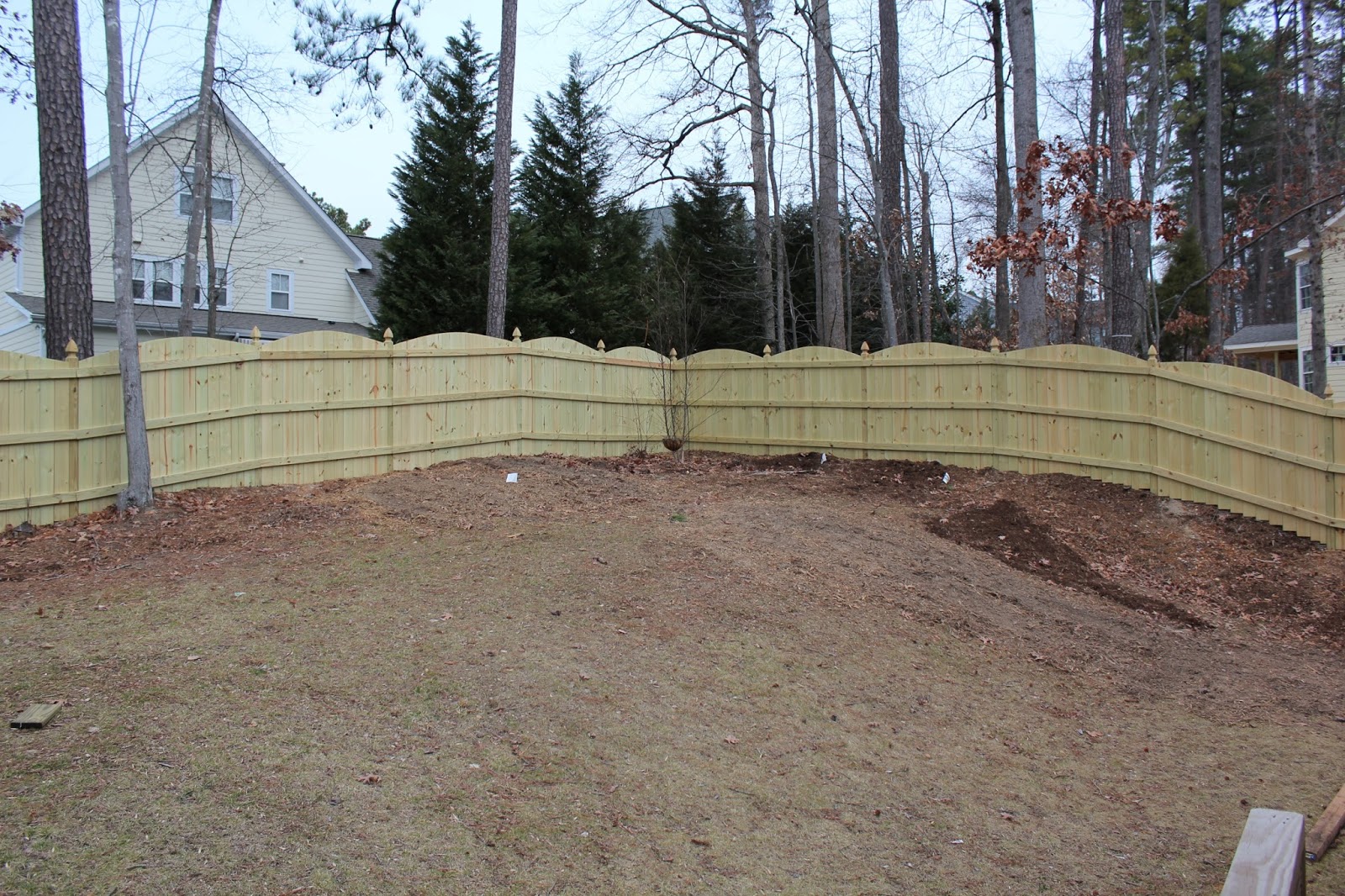
During the three years we lived in the Red House, I think the back yard has changed the most.  When we moved in there was nothing but a few trees.  We put in a fence and added lots of plants!

Backyard Fence Garden
This part of the garden, which is along the side of my backyard, went through the most changes throughout the three years, probably because this was where the largest majority of my plants died!  Plants here had to contend with a hot, dry slope, bad drainage from the clay soil, and deadly root-eating voles.

Before:

After:

Before:

After:

Sunny Side Garden
There used to be large oak trees on one side of the yard.  Sadly, they all became diseased and we had to have them removed.  With the new amount of sun, this eventually became the spot to squeeze in a veggie garden and blueberry bushes.

Before:
This is the only pic I have of the side yard back when.  My youngest was so little!

After:
Blueberry bushes and a Yoshino Cherry Tree are on the left, my veggie garden is on the right.

Closeup of my horseshoe-shaped veggie garden:


Shade Garden
The shade garden was my favorite garden to make.  In North Carolina, a cool, shady place to garden is a wonderful thing.  I wanted to surround all the plants here with moss - a goal I mostly achieved by the time I left. 

Before:

After:

And yes, I did keep this bench!


I hope you all enjoyed the tour of part of my previous garden!  Hopefully this time we'll stay put for quite awhile, and for the next house I'll be able to put up before and after pics 10 or even 20 years down the line.  
(Right, dearest Mr. Red House?)

Wednesday, June 26, 2013

In Three Years - Part 1

Patience is a virtue, right?

We have bought an unfinished house here in the Boston area, but, of course, complications have arisen and it's taking longer than expected to finish it.  I am eager to get started with garden planning, but I am having trouble even picturing where things should go as the lot is not even completely graded yet.

So while I wait I am taking a look back at my last Red House Garden to remind myself how much the garden grew in just those three short years, and what I have to look forward to for the next house...

Before:

I started gardening in the front yard first.  In the beginning there were a few basic shrubs, one tree, and that's pretty much it.

Front Right Garden

Somewhat Before:
Three Abelias, a Nandina, and a 'Sky Pencil' Holly were put in by the builder here.  By this picture, taken early in the first summer after we moved in, I had already added in some stepping stones and other plants.


After:
Late Winter
The front yard is where I have all of my early bulbs.  Daffodils start blooming in February here, followed in spring by Dutch Irises.

Spring
The crown jewel of this part of the garden in spring is my abundantly flowering Clematis 'Guernsey Cream'.


Then in summer comes the Lilies, Black-eyed Susan, yellow Gladioli and a couple other Clematis vines.  The Abelia shrubs also start blooming their little white flowers. 

Summer

Front Left Garden

Before:
More Nandinas, Abelias, and a Sky Pencil Holly were spaced around the front.  The builder's landscaper did pick very hardy plants - one can find these same plants around every parking lot in this area of NC.  (Mr. Red House thinks I'm subtle in my opinions of these plants..)


After:
I left the basic shrubs, but we added stepping stones, a fence, and an arbor, along with other plants.  I must have planted hundreds of daffodil bulbs of various kinds and bloom times throughout the front yard.

Spring
I squeezed lots of plants in this corner of the garden - along with the daffodils, Black-eyed Susans, Gladioli, Salvia, Irises, Dahlias, Clematis vines, Inkberry Holly bushes, and one incredible 'Incrediball' Hydrangea were added.  Among others.

Summer
 In fall, the one tree the builder planted, an 'Autumn Blaze' Maple, turns a lovely shade of scarlet. I also planted Coreopsis and Gaillardia, which usually extend their blooms into fall. 

Fall

Mailbox Garden:
Mailboxes just beg to be surrounded by plants, don't they?  Initially the mailbox was surrounded by weeds hard-to-grow grass and sidewalk.  I eventually ripped that out (grass, not sidewalk), and put in a teeny-tiny garden.

After:
More daffodils!  For summer, Salvia and Lantana take up the slack.

Spring
Summer
Not bad for just three years, right? 

After:

Next post: before and after pics of the backyard..

Wednesday, June 19, 2013

Dear Mother-in-Law, Please Do Not Read This Post

The Common Garter Snake

Garter Snake
They rarely bite.
In fact, if captured, they are very likely to squirt a bad-smelling fluid on you.


And, as far as snakes go, they are quite shy.
They run when they see possible threats.
They were rather hard to even take a picture of.


A garter snake's primary prey are earthworms and amphibians.
Animals that eat garter snakes include hawks, crows, snapping turtles, large fish (such as bass and catfish), cats, dogs, and even bullfrogs.


The humble garter snake is even the Massachusetts's state reptile, thanks to former MA governor Mitt Romney and the efforts of a couple young boys.

shed garter snake skin
All of this information, however, is probably of no comfort to my Mother-in-law...


...who would probably be very upset to learn that at least three of them are living in her yard.

shhhhh....