Tuesday, October 11, 2011

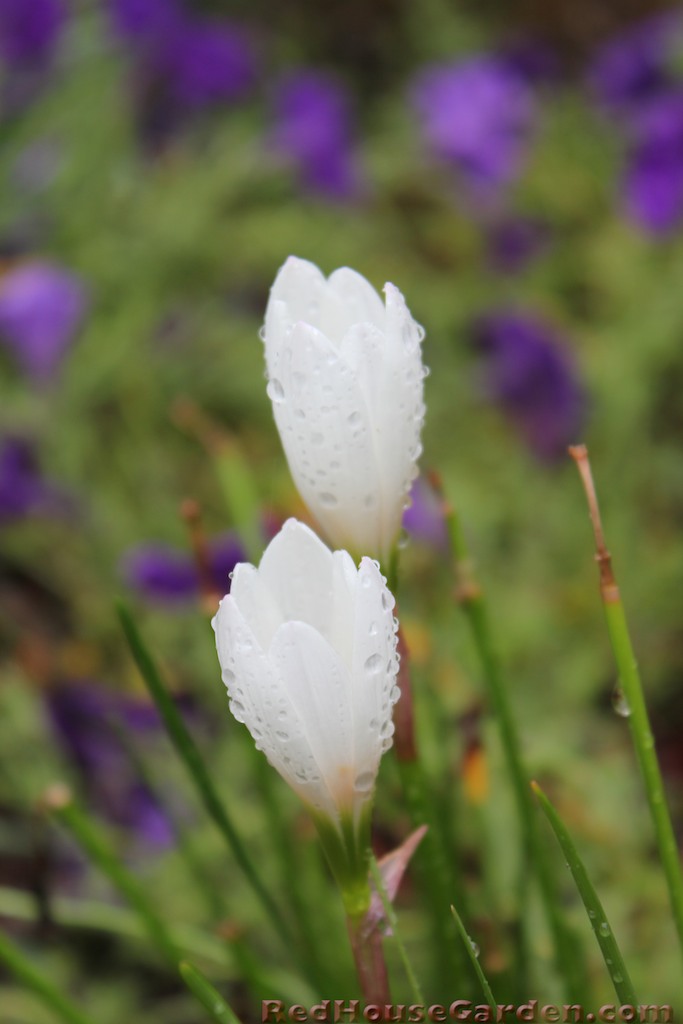
A shady fall garden of... foxgloves?

Now that the temperature is cooling off, the flowers in my shade garden have taken off.


The impatiens have renewed their efforts and are blooming their heads off.


The moss that I transplanted into my little moss garden is remarkably still alive and even providing a cool, shady retreat for some garden wildlife.


And the highlight of this shady fall garden is...


... a foxglove?!

One lone foxglove plant survived the hot summer and is reblooming.


What a way to celebrate the cooler weather!

Hope you all are having a happy Bloomin' Tuesday!

Monday, October 10, 2011

Tackling a Low Spot

The Problem:

Ugly air-conditioner + Poorly drained, compacted soil + Weeds = Problem
This is a low spot between my house and our neighbor's.  Whenever it rains, it becomes a big pool of water, even with our neighbor's French drain.  The problem is compounded by our dirt, which has been thoroughly compacted by equipment brought in to take out our dying oak trees in the back yard.

The only thing that grows well in this poorly draining, compacted soil is crabgrass and other assorted weeds.  Our neighbors put in lush looking Zoysia grass, which makes this strip look even more sad.

Neighbor's yard     -------      Our yard      
So what to do about a poorly draining, compacted low spot?

The Solution:

Step 1: Till that baby up!
(Can I get some Tim Allen grunting from the audience?)

Meet my new little tiller!
Step 2:  Add dirt to raise up the low spot.

Step 3:  Plant something that appreciates poorly drained, swampy areas.

I planted Inkberry bushes, a type of slow-growing holly that is native to North Carolina.  They are evergreen and develop 'black as ink' berries in the winter that the birds enjoy.


The compact cultivar Inkberry 'Shamrock' eventually grows to around four feet high and five feet wide and can easily be pruned smaller. 


Step 4: Add stepping stones

Step 5: Add lots of mulch!

The final reveal:


Step 6:  Add more plants on either sides of the stepping stones to balance the garden out and hide the air-conditioner a little better.  Sadly, our landscaping budget has run out for the time being, so this step will be completed at a later date.  

Step 7:  Convince Mr. Red House that this was not a ploy to add more garden area and buy more plants.
Like I would do something like that... ;)

Thursday, October 6, 2011

Garden Fun Friday!!

I think it's time for some garden blogging fun, so for the next few weeks I am going to have Garden Fun Friday here at the Red House Garden!   If you have any gardening fun going on today on your own blog, feel free to join in by putting the link to your blog post in the comments! 

For this week's Garden Fun Friday, I'm doing another Where's Waldo.   
Okay, people, can you spot the wildlife in the photo?
Click on the photo to enlarge it.  Good luck!

(1)

 (2)

 (3)

 Did you find them all?

Here are the answers...

(1)
Common Buckeye Butterfly
(2)
Orange Sulphur butterfly
(3)
Eastern Fence Lizard
That was easy, right?

Do you have any garden fun to share?
Happy Garden Fun Friday!

Wednesday, October 5, 2011

Part Sunshine, Part Repose

Repose:
(1) to lay down or rest
(2) peace of mind, tranquility
(3) to lie dead

Many gardeners rarely repose (1) lie down or rest in their own garden, myself included.  Those sitting areas that we put in our gardens are usually for someone else to enjoy.


There is too much to squeeze into the time available for gardening, too much planting and interaction and exploring to do to sit and rest.


If I am sitting or lying down in the garden, it is most likely to get onto the same level as the nature around me.


Gardening does supply me with an enormous amount of repose, however.  
Repose (2) peace of mind, tranquility, is the essence of gardening for me.


When things are in chaos around me, I look out the window into the garden for a moment of tranquility.  There is something about the garden that puts my mind at rest.  


Working in the garden is usually part warm, sunshiny happiness, part cool, shady repose for my soul.


One exception to this, however, is when I find part of the garden in repose (3) lying dead, when it should not be.


Monday, October 3, 2011

The Freeman/Byrd Garden

The Garden Conservancy is an organization in the U.S. dedicated to preserving notable private gardens and opening them up to the public for enjoyment as well as educational purposes.


Their Open Days program provides the opportunity to tour amazing private gardens.  Five residential gardens in the Raleigh area were part of this program in September.  I was not able to get to all of them, but one I enjoyed in particular and was very thankful I went to is the Freeman/Byrd garden.  Enjoyed is not even really the term I would use - more like rapturously experienced.

I kind of feel bad sometimes writing about gardens that many people will not get to visit.  Dear Reader, believe me when I say that I would have taken you if I could.  And if you live in the Raleigh area, be on the lookout for the next tour of this garden.

Here is the front.  Nice, but not expecting a garden that will blow you away, are you?  Just wait...


Take the garden path around to the garden shed in the back, and you will start hearing sweet musical strains from the speakers hidden throughout the yard.


Although the garden is less than ten years old, it has the feel and presence of an old English garden.  Towering trees are covered in ivy, and stone statues are partially hidden in the lush greenery.


The owners have built several koi ponds, a garden house, greenhouse, and chicken coop that all beautifully match the house, and deck areas for enjoying the magnificent garden.


As if being in the midst of stunning gardens while listening to beautiful music and the trickling of fountains wasn't enough, the owners of this garden somehow contracted several white butterflies to flit around and show off to everyone on the tour for the entire time.


 Would you believe that a garden like this is also right next to the interstate?


I hope you enjoyed the virtual tour.  
Check out the Garden Conservancy's website for an Open Days program near you - you never know what secret garden you might find.

 
 linking with Mosaic Monday

Saturday, October 1, 2011

It's Fall in North Carolina - Time for Bulb Shopping!

It is now officially fall, and the weather is getting cooler.  It's one of my favorite times of the year - bulb shopping!   The plant stores are full of bulbs, the bulb catalogs have come in, and I am having fun deciding which new flowers to add to my gardens.

Springtime at the Red House
Bulbs are one of the easiest ways to grow plants, in my opinion, and nothing says spring like those early bulbs coming up after a long brown winter.  (Here in North Carolina, we have brown winters.  Having grown up with white winters, I must say I appreciate a little snowfall to pretty things up!) 

Narcissus 'Rijnveld's Early Sensation' is one of my earliest bloomers, coming up with the crocuses at the end of February.
Where is the best place to get bulbs?  Many common bulbs you can get in big home and garden stores, and these have grown just fine for me and are the most economical.  Their selection will also give you a clue as to what type of bulbs work well in your area.  Many local garden nurseries will have a larger selection of bulbs.  If you get bulbs early, store them in a cool, dark place until it is time to plant them.

If local stores do not have the color or type of bulb you are looking for, you can order them online.  I order many bulbs at Brent and Becky's Bulbs.   Their selection is amazing (they have over 200 different types of daffodils alone) and many of the bulbs I've gotten from them are more like doubles.  If you want to see reviews of any online stores, you can find them at Dave's Garden, a plant and garden store review site. 

Narcissus 'White Lion' with Narcissus 'Sweetness'
What bulbs do well in North Carolina and the Southeast?  NC State University has some good information about bulbs that do well in North Carolina as well as some tables on their bloom times.

If you are looking for critter-proof bulbs, Narcissus (also known as daffodils) are the easiest to grow, and they tolerate my heavy clay quite well.  Allium needs better drainage than my clay is currently affording, but they are more critter-proof as well.  Hyacinth bulbs are toxic to animals, and Snowdrops are supposed to be critter-resistant as well.  (I do not make any guarantees, however, especially when it comes to squirrels!)

As far as non-critter-proof bulbs go, Crocus grow well in this area if you can keep them away from the squirrels and voles.  (Let's not talk about those 100 crocus bulbs that 'disappeared' even after I covered them with netting and mulch.)  Most Tulips are considered to be an annual here in the Southeast, as they need a cold winter to flower reliably.  I have tried growing them in outdoor planters to keep them colder with some success.  You can also dig them up after their foliage dies and store them in cool dry place for replanting in the fall.  Species tulips are more likely to be perennial.  Tulips do need good drainage, and be aware - they are very tasty to many critters.

Red tulips in an outdoor planter.  They came up again, but deer and rabbits often ate the flowers.
There are various tricks you can try to keep the animals from eating your plants, such as planting with tabasco and red pepper, planting bulbs in cages, and spraying foliage with various repellants.  Planting bulbs in gardens close to house entryways will deter a lot of critters.   There is a reason I plant so many daffodils, though!

I had many crocus planted in the gardens at my last house.  Animals usually left them alone, probably because they were so close to the house.
When should I plant my bulbs? You should plant your bulbs when the soil temperatures are below 55° or 60°F, or when the temperature at night is below 50°F for a couple of weeks.  In North Carolina, that is usually around the end of October or beginning of November.  If you plant your bulbs when it is too warm outside, it will start putting its energy into sprouting as opposed to making nice roots, which you don't want.  Also if it is too warm and there's been a lot of rain, the bulbs are more susceptible to developing mildew and rotting.

For more Northern gardeners, you want to plant bulbs about six weeks before the ground freezes solid so that your bulbs will have a chance to develop a nice root system before the winter. 

Narcissus 'Queens Day' with a few tiny Crocus chrysanthus 'Ard Schenk'
 What if my bulbs sprout early?  In North Carolina, we often get bouts of warm weather in the middle of winter, and bulbs will often start sprouting then.  Most of the time, this will not hurt the bulb.  If it has already sent up a flower bud, however, and the bud then freezes, you will have to wait until the next year to enjoy them.  It can be helpful to apply a winter mulch to insulate against some fluctuating temperatures and also make sure that you plant the bulbs deeply enough.  Some bulbs such as grape hyacinths and fall-blooming crocus are supposed to send up leaves in fall, so don't worry when they sprout!

So enjoy bulb shopping!  
(And let's not tell Mr. Red House how much money it's possible to spend on bulbs, okay?)

Ooo, maybe I'll try growing Ranunculus from bulbs this year?