Thursday, November 10, 2011

Ode to Abelia

Looking for a good shrub that can withstand the hot sun of warmer climates and will tolerate pretty much any soil, including dreaded clay?

How about one that blooms for several months and attracts butterflies?

And while we're at it, how about one that has beautiful fall foliage but also keeps most of its leaves in the winter?

Believe it or not, there is such a shrub  - the under-appreciated and often over-looked Glossy Abelia. 

Abelia 'Little Richard'
Abelias are mounding shrubs whose branches have an arching habit.  They stay semi-evergreen or even evergreen depending on the cultivar and location.  They are not as hardy in colder climates, however, and may die back every year in cooler locations. 


Abelias bloom for several months throughout the summer and into early fall.  Depending on the type, the trumpet-shaped blooms may be white, pink, or lavender and are clustered at the end of the branches.

'Little Richard' Abelia sports white flowers.
The bushes are a magnet for the bees and butterflies while in bloom.  I have also heard that hummingbirds like them, but have not seen any on my bushes.

Monarch butterfly on Abelia.
When the flowers drop, they leave the pretty clusters of reddish sepals, which provides interest in autumn.  The foliage will often turn a bronze color as well.

'Little Richard' Abelia in fall - many of the leaves have turned a reddish-orange color.
My Abelia bushes are situated in rather poorly-drained clay and part to full sun.  Abelias do need sun to do well.  One place where I often see Abelias are in parking lot strips.  They must be tough plants to survive there!


You might not recognize those bushes under the trees, but they are Abelias.  They've just been pruned into rounded lumps.

Abelias pruned this way will not bloom.
Okay, Abelias must have some drawback, right?

Well, as previously mentioned, Abelias do not do so well in colder climates.  Some cultivars are hardier than others.   Additionally, cultivars like 'Little Richard' and 'Sherwoodii' will occasionally send out abnormally tall shoots straight out of the middle, a reversion to the species.

Abnormal shoots in the middle of 'Little Richard' Abelia.  Notice that they are straight instead of arching.
If your Abelia throws out these shoots, reach your hand in the shrub and prune them near the ground.  Don't do what I did the first year I had them and cut them off right at the top of the bush - they just branched and continued to shoot straight up!

Pruning Abelias: Do not just take hedge clippers to Abelias and shear them - they will just branch there and look strange instead of arching gracefully (believe me, I've done it!)  Instead, prune by cutting the oldest or straggliest branches way back to the ground.  If the whole bush is starting to look really sad and leggy, you can try cutting the whole bush back to a foot or two high to rejuvenate it.  Prune Abelias in winter, as they bloom on new growth.


Some popular Abelias varieties are Abelia x grandiflora (8 feet tall with white flowers), 'Edward Goucher' (pink flowers), and 'Kaleidoscope' (colorful, variegated leaves and white flowers).  My Abelia 'Little Richard' get up to 4 feet tall and 5 feet wide, despite being touted as a dwarf cultivar.

So if you need a sun loving shrub that will grow in challenging conditions, check out Abelias. They might be the shrub for you.

Monday, November 7, 2011

The First Year of a Shade Garden

This year I put in a shade garden on the north side of the Red House.   I love shade gardens and was really excited about planting it.  Here is a look at its progression this year.

March:

I tilled up the area and added compost.

May:

I added 'Candy Mountain' foxgloves, 'June' hostas, white bleeding hearts, ostrich ferns, pink impatiens, and Double Fiesta Olé Purple impatiens.


I loved the white bleeding hearts.  Hopefully they will return next year even larger!

I added the foxglove to my shade garden as they tend to fry if they get too much sun here in North Carolina, but I think this was a little too much shade for them.  Next year I will try foxgloves somewhere with a little more sun.  The drainage issues that my clay causes is another challenge for them.

August:

In June I had planted a Clematis pitcheri and some violets I had grown from seed.  It's August, and the violets are still going strong!  (Ignore all the weeds..)


September:

This month saw my favorite addition to the shade garden - a little moss garden.  As you can see, the impatiens loved the cooler weather.  The Clematis pitcheri bloomed, but it really needs to be in a sunnier place next year.

Clematis pitcheri
October:

 Impatiens are still going strong!

November:

Things are winding down in the garden now.

This winter we hope to do something about the drainage issue with the path, as it right now it channels water down from our sloping back yard and becomes a soggy mess when it rains.


One thing I wish I had in the shade garden was a small seating area.  It's the only part of the yard that I want to be in during the blisteringly hot summertime!  The big log seat you see there on the other side of the path is in sun for most of the day.  

 Maybe next year...

Thursday, November 3, 2011

What is your Garden Fairy Name?

I hope you have all had some fun with my Garden Fun Friday posts the last few weeks!  Here is the final one - for some silly fun, take this short quiz to find out what your name would be if you were a fairy living in your garden.

Garden fairies are wily and not easily photographed, but they leave their mark!


Are you?
Male
Female


What is your favorite flower? (common name, no fancy latin names please!) 


What is your favorite tree? (common name)   


What is your mood usually when gardening?
tired
grumpy
peaceful
happy


Which of these is your favorite?
tree
stone
moss
stream
mushroom

So what is your garden fairy name?

Wednesday, November 2, 2011

Ephemeral Moments

Ephemeral:  lasting a very short time; short-lived; transitory

Today's 'Word for Wednesday' over at Garden Walk, Garden Talk is ephemeral. 

Gardens are always in transition.  Many flowers and plants are short-lived.  Annuals grow, bloom, then go to seed and die. 


However, the most meaningful ephemeral moments that take place in my garden involve growing things of a different sort.


There are two little sprouts growing at the Red House.


Children grow and change so fast.  Before long our little sprouts will be all grown and off to find gardens of their own.


May we enjoy these fleeting moments while we can.
They are all too ephemeral.

Monday, October 31, 2011

Appreciation

Today has been a cold, rainy, dreary day, a fitting end to a dreary month.

October has been a long month.  I haven't been in the garden very much, as there has been a lot of sickness in the family lately.  Thankfully everyone is getting better, except for our four-year-old's beautiful red betta fish, aptly named Fishy, who lost the good fight today.  We buried him in the rain, the grave site marked with a rock.
  
You can imagine how that went.


Some rain is good, and to a certain extent I think, some struggles in life are good.  Much like a lot of rain makes us appreciate the sun, the hard days make us appreciate the blessings in our life.


The small beauties in life stand out much more against a background of ugliness, just like a small light looks so bright in a field of darkness.


Too much rain can be devastating, and I count my blessings that my family has made it through the torrents that we have experienced in our lives thus far.

After a torrent, we may have emerged a little worn and battered, but we are also hopefully a little stronger, a little wiser, a little more compassionate..


and a little more appreciative of the sun.

Friday, October 28, 2011

Garden Fun Friday - Part of a Whole

Happy Garden Fun Friday!  I think it's a good time for some online garden fun here in North Carolina, as it is looking quite cold and rainy outside.  If you have any gardening fun going on today on your own blog, feel free to join in by putting the link to your blog post in the comments!

On to today's gardening fun:
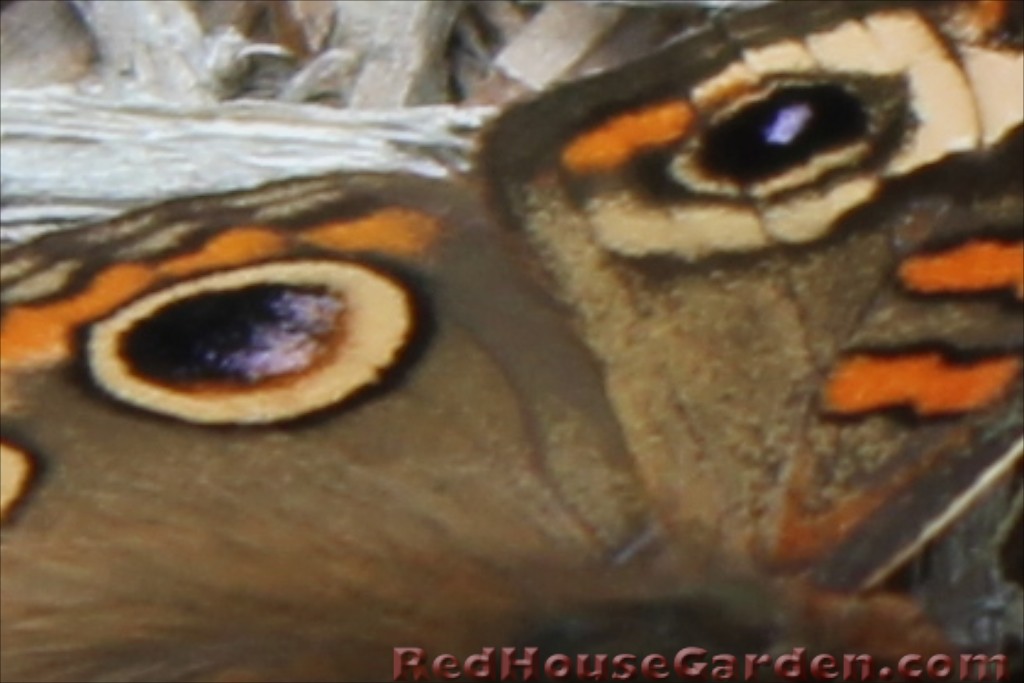
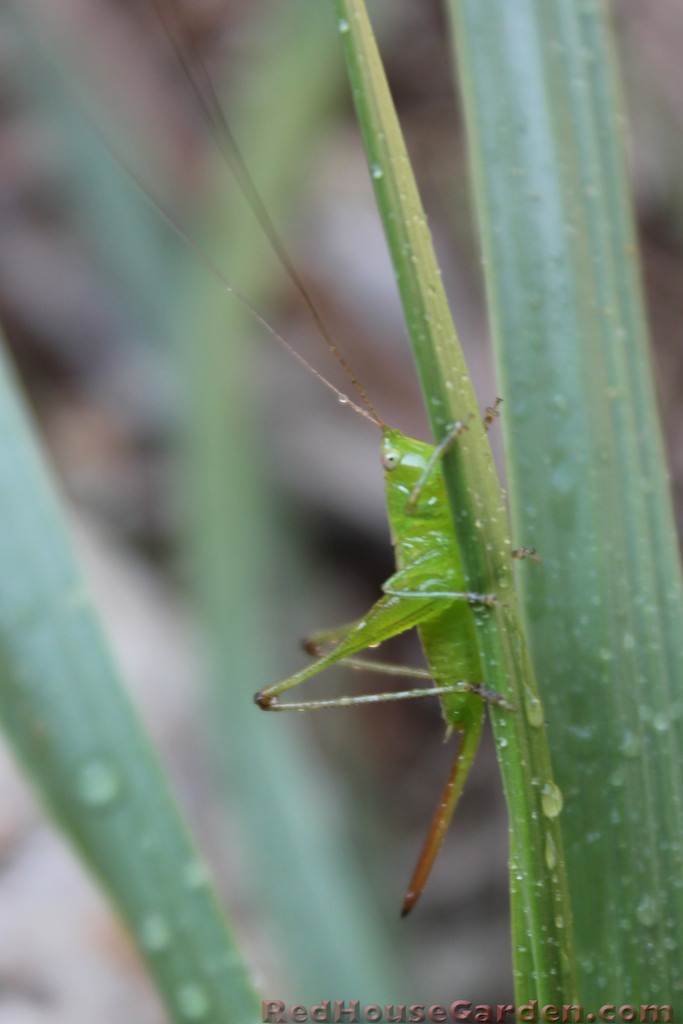
Can you guess the garden critter from the part pictured? 

(p.s. To give you fair warning, picture #6 might not be for the faint of heart.)

 1:


 2:


 3:


 4:


 5:


 6:


Do you think you knew them all? 
 Here are the answers:


1:
Snail
2:
Monarch Butterfly
3:
Grasshopper
4:
Damselfly (partial credit if you said Dragonfly)
5:
Buckeye Butterfly (partial credit if you knew it was a butterfly, but didn't know what kind)
6:
(Remember, I warned you..)
Spider
(Extra credit to whoever can identify the spider - I'm thinking Argiope Spider, a common orb spider, but I'm don't know my spiders very well...)

 How did you do?  Did anyone get all of them?